Augmented everest
the Digital Twin
for extreme environments
A predictive physiological model designed to see collapse before the operator does. Fusing biometric and environmental telemetry into a continuously updated forecast of human limits.Founded 2021.
Prototype presented at the World Extreme Medicine Conference.
In active R&D.
TAK-integrated predictive
biometric plugin
See the danger before you reach it
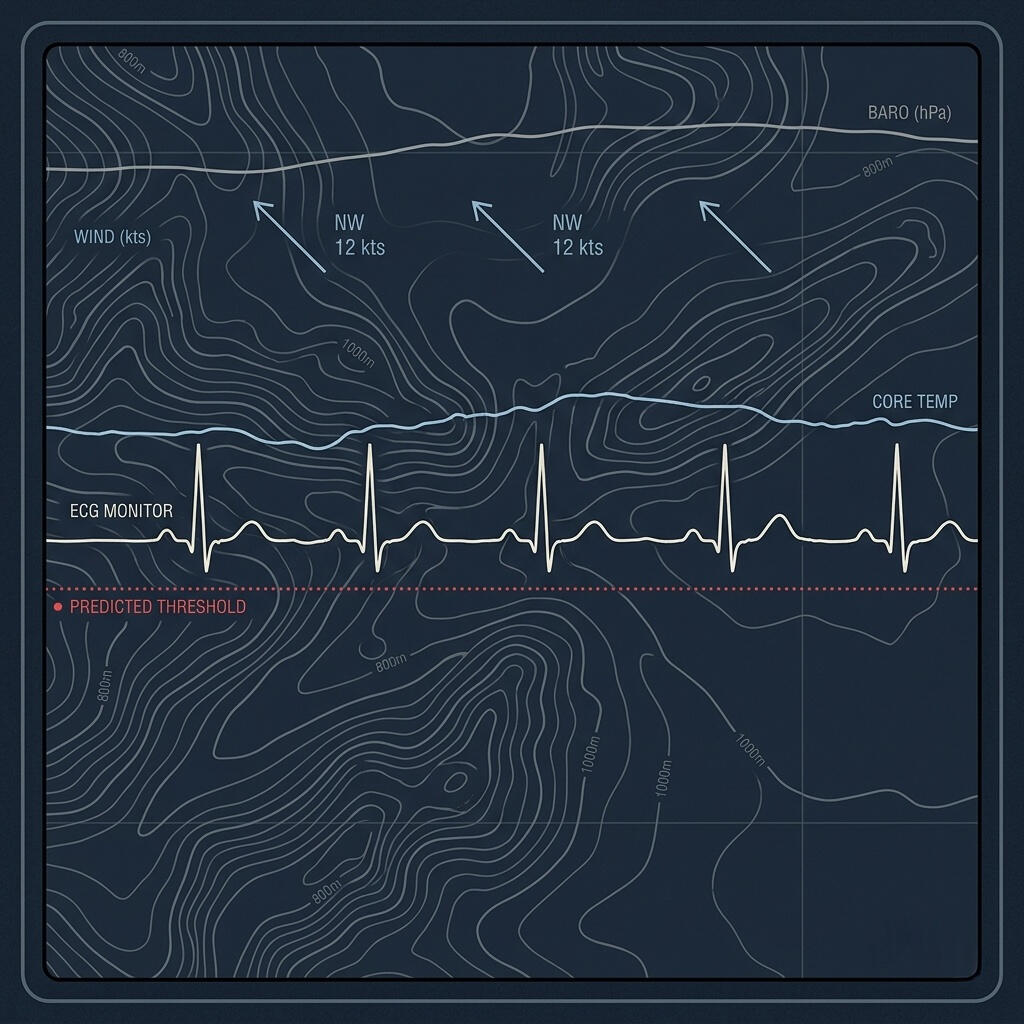
Augmented Everest builds a personalised baseline from past performance, then anchors a Present Twin in real-time biometric and environmental telemetry. The engine projects forward, creating a Future Twin that scouts the hours ahead. By simulating physiological trajectory against shifting weather, altitude, and load, the system is designed to deliver actionable alerts before critical thresholds are crossed, replacing gut instinct with predictive clarity.
Origins
Where this came from
Augmented Everest started in 2021 with a question. Why do we still send people into hostile environments, mountains, fires, denied terrain, disaster zones, relying on gut instinct to decide when to turn back? The physiological envelope is finite. The signals that predict collapse are measurable. They are usually only legible in retrospect.
The early prototype was presented to the extreme medicine community at the World Extreme Medicine Conference in 2021, and the work has been under continuous development since. It sits at the intersection of physiology, predictive modelling, and applied tactical communications.
The architecture
How it's built
The design fuses medical-grade ECG, research-tier internal thermal tracking, and hyper-local environmental telemetry into a single predictive layer. It is being built to integrate with TAK, the situational awareness standard used across military and civilian emergency response, so the output reaches operators through infrastructure they already use, without adding another screen to manage. The hardware is being designed for low-profile wear under load, with signal integrity as a non-negotiable.
PERSISTENT INTELLIGENCE
Inside and outside, fused
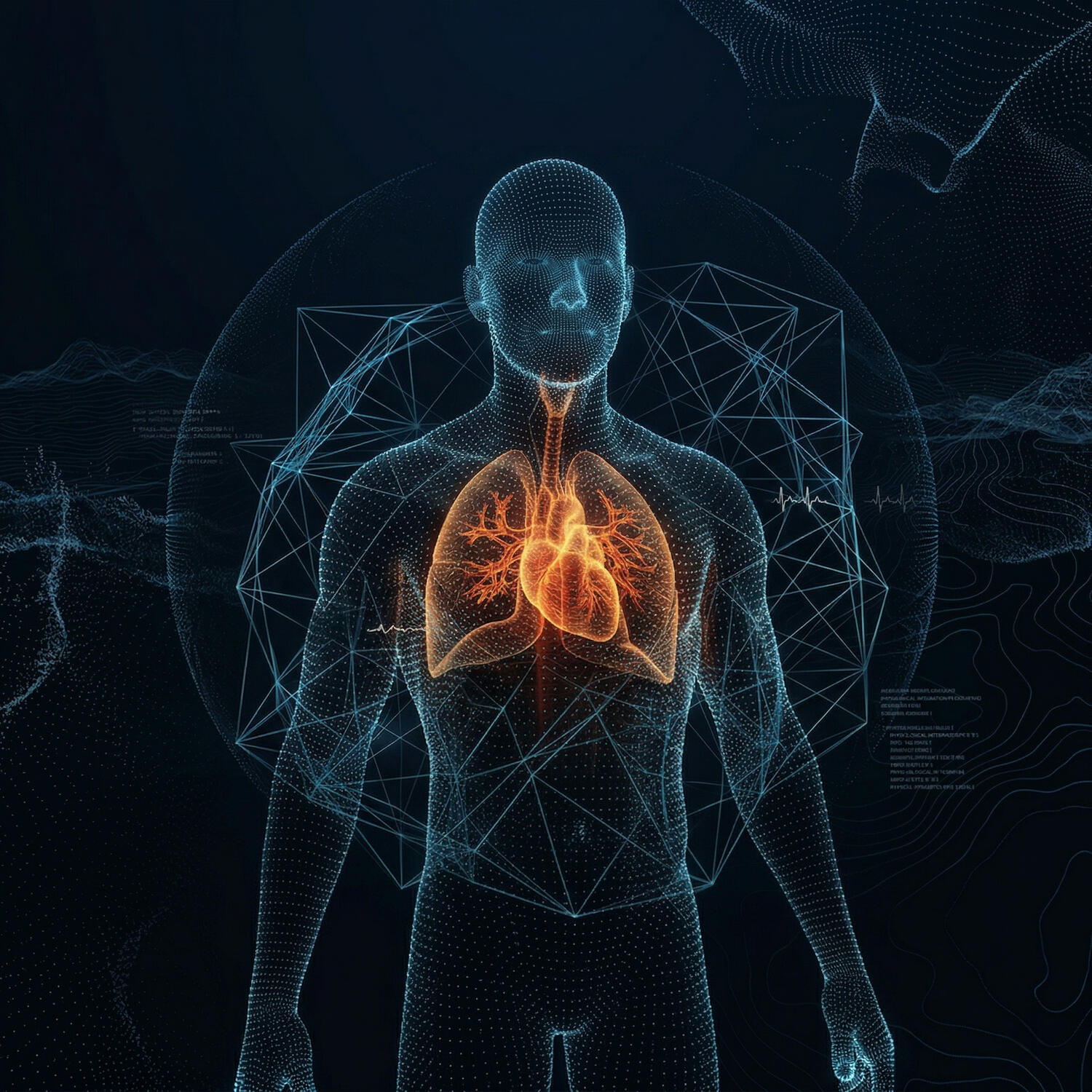
Predictive accuracy depends on capturing both sides of the equation: the operator's internal state and the environment acting on them. Augmented Everest is being built to fuse internal physiology, cardiac, thermal, kinematic, with external telemetry from a hyper-local sensor array, then forward both streams into the predictive model. Current development is focused on closing the feedback loop between sensing and forecasting.
Built for the extremes
Where this is going
Augmented Everest is being designed around four operating environments where physiological red lines are crossed daily, and where the cost of crossing them is measured in lives. The same predictive engine, adapted to the constraints of each domain.
Zero-margin operations
Elite Exploration & Frontier Expeditions
Expedition leaders need to know when a team member is approaching their physiological envelope, not after the fact, but in time to change the plan. The system is being designed to surface that signal continuously, at team level, across any biome.

TIME-CRITICAL EXTRACTION
Search & Rescue (SAR)
& First Responders
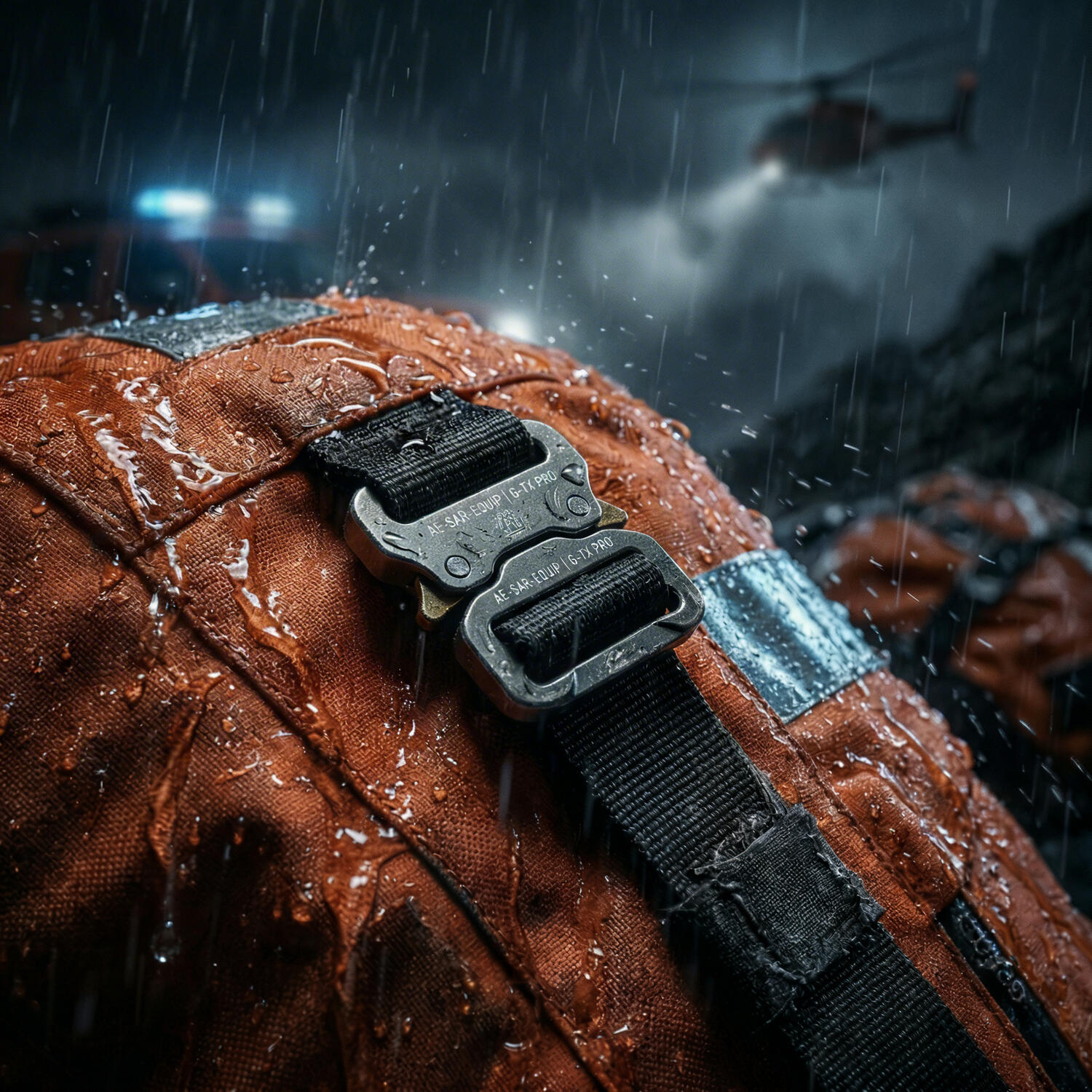
SAR personnel routinely push past their own limits to reach casualties. The TAK integration is intended to give incident commanders visibility on rescuer load alongside the rest of the operational picture, so rotation decisions can be made before a rescuer becomes a second casualty.
HIGH-VOLATILITY ZONES
Wildland Firefighting & Extreme Industry
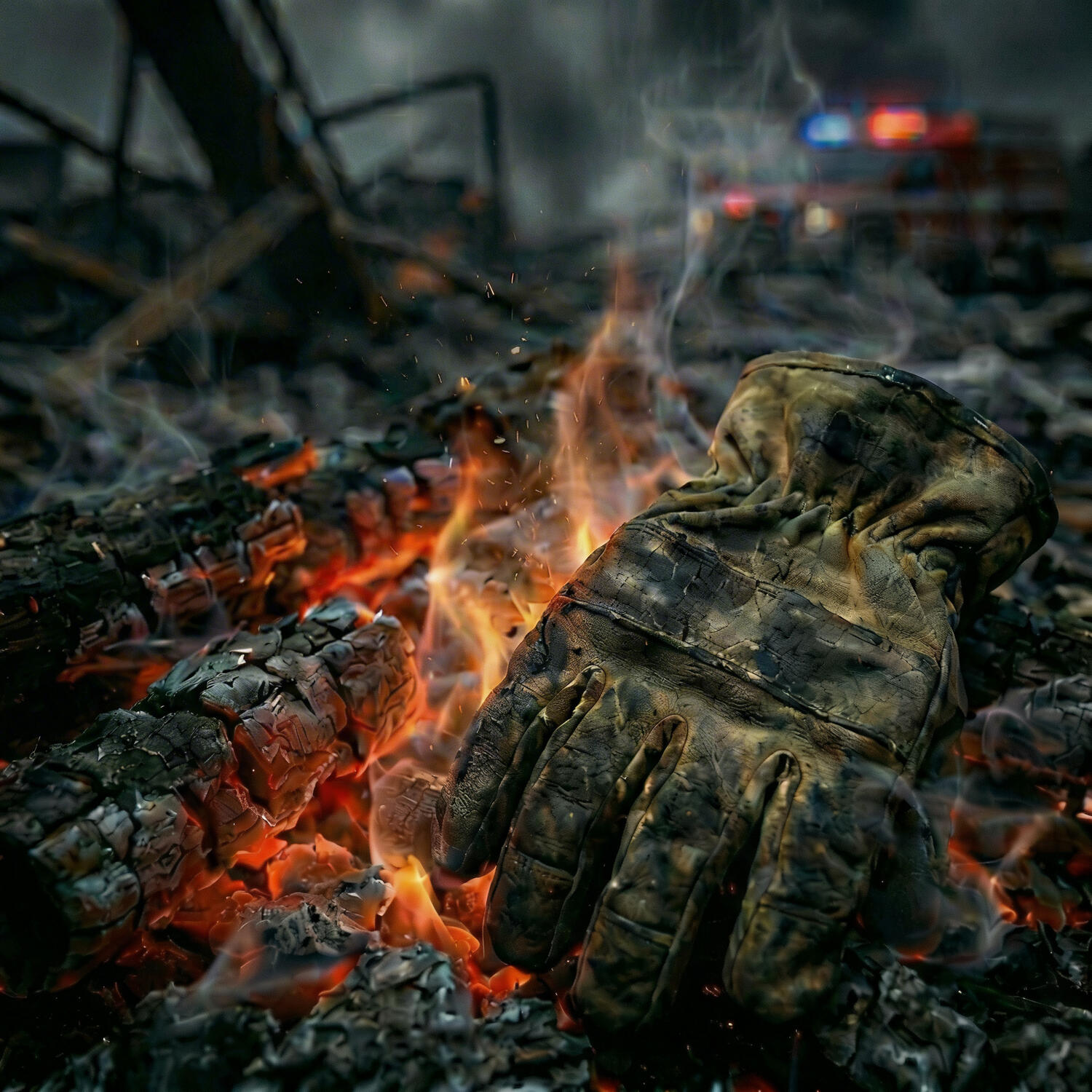
Wrist-worn devices fail in the conditions that matter most. The architecture uses chest-mounted, research-grade kinematic and thermal sensors to predict thermal overload and cardiovascular strain, designed for the heat envelope where firefighting actually happens.
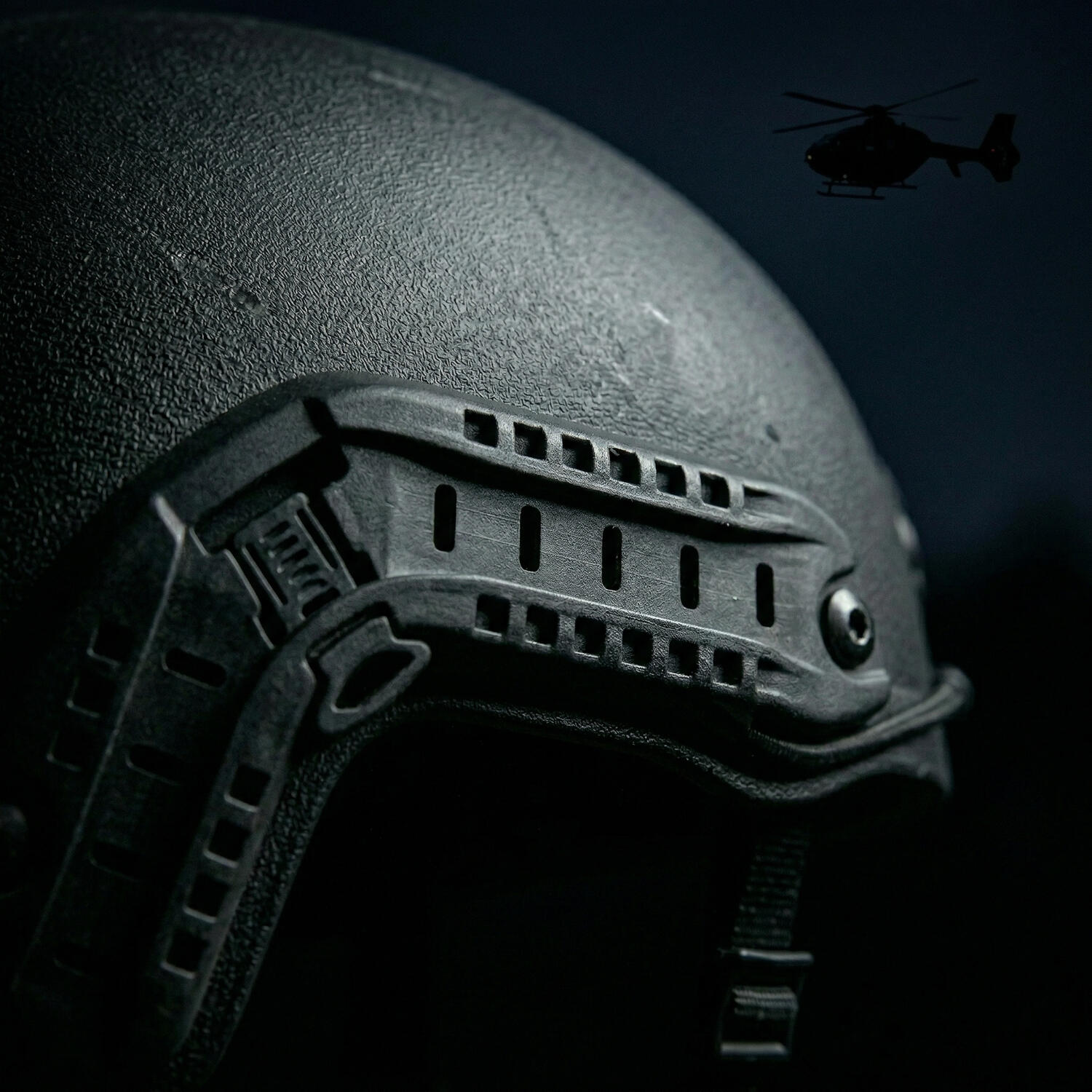
DENIED ENVIRONMENTS
Tactical Defense & Special Operations
An audio-first interface is intended to keep the operator's attention where it needs to be. Running quietly within existing TAK infrastructure, the system is designed to give squad leaders confidence that every operator is physiologically capable of the objective, without adding cognitive load.
WHO IS BEHIND THIS
Founder
Augmented Everest is led by Toni Sillanpää. Twenty years in international media production across five continents, followed by senior research communications work in cross-border science programmes spanning Germany and the United Kingdom. MSc in Global Politics, BA in Communication Studies and Anthropology, both from the University of London.
© 2026 Augmented Everest. All rights reserved. This site uses no tracking cookies.